FRASS Organic Insect Fertilizer
FRASS: The Fertilizer of the Future Derived from Insect Farming - Complete Guide on Composition, Applications and Valorization in Spain
The insect farming industry for alternative protein production is experiencing exponential growth in Europe and Spain, driven by the need to develop more sustainable food systems and reduce dependence on conventional protein sources. With a global insect protein market projected to reach several billion euros in the next decade, Spain is positioning itself as a relevant player in this emerging sector, especially in the farming of black soldier fly (Hermetia illucens) and mealworm (Tenebrio molitor). This development generates not only high-quality animal protein for fish, poultry and pet feed, but also significant quantities of an extraordinarily valuable by-product: FRASS.
FRASS, a term derived from German that refers to the excrement and metamorphosis residues of insects, represents much more than a simple by-product of the production process. This organic material, rich in nutrients, stabilized organic matter and bioactive compounds, is consolidating as a new generation organic fertilizer with exceptional agronomic properties. As insect production facilities scale their productive capacity, FRASS generation increases proportionally, creating both valorization opportunities and logistical challenges. This article provides an in-depth analysis of the characteristics, composition, applications and market for FRASS in Spain, providing updated information on its potential as a valuable resource in sustainable agriculture and the circular economy.
What is FRASS? Composition and characteristics of insect fertilizer
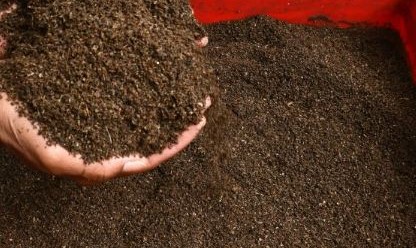
FRASS is the solid residual material resulting from the bioconversion process carried out by insect larvae when feeding on organic substrates. Its composition includes larval droppings, molts or exuviae (remains of the chitinous cuticle that insects shed during their growth), unconsumed substrate remains, beneficial microorganisms from the digestive tract of insects, and to a lesser extent, remains of insects that died during the process. Unlike traditional compost or conventional manures, FRASS has passed through the digestive system of insects, which significantly transforms its physico-chemical and biological properties.
The nutritional composition of FRASS varies considerably according to several determining factors. The producer insect species significantly influences, with black soldier fly FRASS generally being richer in nitrogen than mealworm FRASS. The type of substrate used to feed the larvae is crucial: protein-rich substrates generate FRASS with higher nitrogen content, while plant substrates produce FRASS with higher proportion of fiber and carbon. The development stage of insects and the conditions of the production process also modulate the final composition of the product.
In general terms, black soldier fly FRASS presents indicative dry matter values between 30% and 50%, depending on subsequent processing. Total nitrogen content typically ranges between 2.5% and 4.5% on a dry basis, with a significant proportion in slow-release organic form. Phosphorus (P₂O₅) is found in ranges of 1.5% to 3.5%, while potassium (K₂O) varies between 1% and 2.5%. Organic matter represents between 40% and 60% of dry weight, with a degree of stabilization superior to conventional compost due to the digestive process of larvae. FRASS pH is usually located at slightly alkaline values, between 7.5 and 8.5, which is beneficial for acidic soils.
A distinctive and highly valuable characteristic of FRASS is its chitin content, the structural polysaccharide that forms the exoskeleton of insects. Chitin present in exuviae and cuticular remains represents between 3% and 8% of FRASS dry weight, conferring unique properties to the product. This compound acts as a stimulant of plant immune systems, induces systemic resistance against fungal and bacterial pathogens, favors the development of beneficial chitinolytic microorganisms in the soil, and improves soil structure in the long term.
FRASS according to insect species: differences and specificities
The European insect production market is mainly concentrated in two species, each generating FRASS with differentiated characteristics. The black soldier fly (Hermetia illucens) is the most widespread species in Europe for bioconversion of organic waste and protein production. Its FRASS presents a balanced nutritional profile with good NPK ratio, high content of stabilized organic matter, significant presence of chitin from numerous larval molts, beneficial microbial load from the digestive tract of larvae, and slightly alkaline pH. The capacity of black soldier fly larvae to process a wide variety of organic substrates, including food waste and agro-industrial by-products, makes their FRASS have a variable but generally rich composition.
Tenebrio molitor, known as mealworm, generates FRASS with specific characteristics. Traditionally raised on cereal and bran-based diets, it produces FRASS with lower nitrogen content than black soldier fly, typically between 1.5% and 3% on a dry basis. It presents higher proportion of carbon and fiber due to cereal substrates, has moderate chitin content, and exhibits a more granular and dry texture. This type of FRASS is especially suitable for mixtures with other fertilizers and for applications in crops that require more moderate nitrogen input and more gradual nutrient release.
Other species such as house fly (Musca domestica) or crickets are raised on a smaller scale in Europe, but also generate FRASS with their own nutritional profiles. Ongoing research on different insect species and their rearing systems is expanding knowledge about the specific characteristics of each type of FRASS and their optimal applications.
Market prices and FRASS valuation factors
The FRASS market in Spain and Europe is in a development and structuring phase, with increasing supply as insect production facilities scale their operations. Prices vary significantly according to multiple factors, and the market has not yet reached the maturity of other established organic fertilizers. For black soldier fly FRASS in wet or semi-dry format (30-50% moisture), bulk sale prices typically range between 80 and 150 euros per ton for large volumes (over 20 tons). In dry and processed format (moisture below 15%), prices increase to ranges of 200 to 400 euros per ton, reflecting drying and logistics costs.
Packaged FRASS for retail sale in 5-25 kg formats reaches significantly higher values, between 600 and 1,200 euros per equivalent ton, mainly targeting intensive horticulture, professional gardening and the growing market of urban gardens and small-scale organic farming. Formulated products that combine FRASS with other components, developed for specific applications, can reach even higher values.
Determining price factors include firstly the nutritional composition, with FRASS with high contents of nitrogen, phosphorus and stabilized organic matter being more valued. Chitin content constitutes a differentiating factor that justifies higher prices due to its biostimulant properties. Product processing substantially influences: drying reduces moisture and weight for transport, sieving homogenizes particle size and eliminates large particles, pelletization facilitates handling and mechanized application, and heat treatments guarantee biosafety by eliminating potential pathogens.
Certification for use in organic farming represents a significant added value, as it expands the target market and allows higher prices. The volume marketed determines economies of scale, with commercialization of large batches being more favorable. Distance to application point and associated logistics costs condition economic viability, especially for wet product with lower density. Demand seasonality, with peaks in spring and autumn coinciding with main agricultural campaigns, generates price fluctuations. Finally, producer reputation and quality and traceability guarantees influence product valuation.
Agronomic applications of FRASS: benefits and target crops
FRASS finds multiple applications in agriculture and horticulture, standing out for providing benefits that go beyond simple nutritional input. In intensive greenhouse horticulture, FRASS is used as base fertilizer incorporated into soil before planting, providing gradual-release nutrients throughout the crop cycle. Its application improves physical properties of soil, increasing water retention capacity and aeration. Horticultural crops such as tomato, pepper, cucumber, zucchini and leafy vegetables respond favorably to FRASS applications, showing improvements in yield and quality.
Organic farming represents a natural market for FRASS, where demand for certified organic fertilizers far exceeds available supply. Organic farms especially value the combination of nutritional input, soil improvement and biostimulant effects offered by this product. FRASS certification for use in organic farming, although requiring specific traceability and biosafety requirements, opens a market willing to pay premium prices for guaranteed quality products.
In fruit growing, especially in crops such as citrus, stone and pome fruits, and berries, FRASS is applied as top dressing around the trunk or in the planting line. Annual inputs of 2-5 tons per hectare, depending on the crop and soil condition, provide essential nutrients and improve biological activity of soil. Progressive nitrogen release is especially suitable for fruit trees, avoiding excesses that would favor excessive vegetative growth to the detriment of production.
Vineyards and other woody crops benefit from FRASS properties. In viticulture, where nutritional balance is fundamental for grape quality, moderate FRASS applications (1-3 tons per hectare) provide nutrients without causing excessive vigor. Olive groves, especially in organic systems, respond positively to FRASS fertilization that improves the structure of typically poor and degraded soils.
Professional gardening and urban green spaces constitute an expanding market for FRASS. Golf courses, municipal parks, corporate gardens and landscaping value products that improve the quality of turf and ornamental plants with a sustainable profile. FRASS packaged for use in urban gardens, terraces and balconies takes advantage of the growing trend towards self-production of food and domestic gardening, where conscious consumers seek natural and sustainable products.
Biostimulant properties and effects on soil health
FRASS stands out among organic fertilizers for presenting properties that transcend simple nutrient input. Chitin present in exuviae and cuticular remains of insects acts as a powerful elicitor of defensive responses in plants. When roots come into contact with chitin fragments, induced systemic resistance mechanisms are activated that prepare the plant to defend itself more effectively against potential aggressors. This phenomenon translates into greater resistance to fungal diseases such as powdery mildew, downy mildew and botrytis, better response to pest insect attacks, and activation of defensive compound production in plant tissues.
The input of beneficial microorganisms from larval digestive tract enriches soil microbiota. Bacteria and fungi that colonize insect intestines, adapted to degrade complex organic matter, continue their activity in soil after FRASS application. This natural inoculation favors organic matter decomposition, facilitates solubilization of poorly available nutrients such as phosphorus, suppresses soil pathogens through competition and antibiosis, and contributes to the formation of stable humic complexes.
Stabilized organic matter present in FRASS, resulting from the digestive process of larvae, presents a degree of humification superior to many conventional composts. This translates into greater persistence in soil, lower tendency to nutrient leaching, better contribution to formation of stable soil aggregates, and positive effect on cation exchange capacity. Scientific studies demonstrate that FRASS significantly improves soil structure, especially in degraded soils or with low organic matter content.
The effect on soil biological activity represents another differentiating benefit. Regular FRASS applications increase soil microbial biomass, stimulate enzymatic activity especially of chitinases, favor beneficial edaphic fauna including earthworms, and improve biogeochemical nutrient cycles. This biological revitalization of soil contributes to long-term sustainability of agricultural systems and reduces dependence on external inputs.
Processing and commercial formulations of FRASS
FRASS generated directly in insect production facilities usually requires additional processing before commercialization. Drying constitutes the most common treatment, especially for product intended for distant distribution or prolonged storage. Solar or natural drying, economical but dependent on climatic conditions and requiring space, is viable in regions with favorable climate. Mechanical drying using belt or rotary drum dryers allows precise control of temperature and final moisture, guarantees biosafety through heat treatment, and significantly reduces volume and weight for transport.
Sieving separates fractions according to particle size, allowing different products to be obtained. The fine fraction, less than 5 mm, is suitable for direct soil application or substrate mixtures. The medium fraction, between 5 and 15 mm, is used in top dressing and specific formulations. The coarse fraction can be destined for complementary composting or eliminated according to target market. Pelletization, which compacts sieved FRASS into uniform granules, greatly facilitates handling and mechanized application, reduces dust generation, improves product flow properties and allows incorporation of additives or complementary nutrients.
Enriched formulations add value to basic FRASS. Mixtures with other organic fertilizers such as vermicompost or compost balance the nutritional profile. Addition of specific microorganisms such as mycorrhizae or PGPR bacteria enhances biostimulant effects. Incorporation of natural minerals such as phosphate or potassium rocks complements nutritional input. Treatments with plant or algae extracts add additional bioactive compounds. These specialized formulations reach specific market segments willing to pay premium prices for differentiated products.
Logistics and marketing channels
Efficient FRASS marketing poses specific logistical challenges related to its physical characteristics and market structure. For insect producers, FRASS represents a by-product whose management must be optimized to convert it into an additional revenue source rather than a cost. Continuous generation throughout the year, unlike the marked seasonality of agricultural residues, allows better logistics planning but also requires adequate storage capacity.
Marketing models that are consolidating in the market include direct sales to medium-large agricultural farms that consume significant volumes and can collect the product directly at production facilities. This channel minimizes logistics costs but requires commercial effort to identify and capture customers. Contracts with agricultural cooperatives and producer organizations allow channeling important volumes towards multiple associated farmers, reducing commercial dispersion. Distribution through companies specialized in agricultural inputs and agricultural supply stores accesses broader markets but involves sharing margin with intermediaries. Online sales for specific segments such as organic farming, professional gardening and urban gardens is growing, leveraging specialized platforms and e-commerce.
FRASS transport, especially in wet format, represents a critical cost factor. With apparent densities between 400 and 700 kg/m³ depending on moisture and processing, transport to distances greater than 100-150 km significantly reduces the economic viability of wet product. This favors local or regional marketing models for undried product, reserving longer distances for dried or pelletized product that optimizes the value/weight ratio transported.
Regulatory framework and FRASS certification
FRASS commercialization as fertilizer in Europe is regulated by Regulation (EU) 2019/1009 on EU fertilizing products, which establishes functional product categories and harmonized requirements. FRASS can be marketed as organic fertilizing product when it meets the requirements of category PFC 3 (Organic soil amendment) or PFC 6 (Organic fertilizer of animal origin), depending on its composition and processing. Component materials must come from permitted categories, including insect excrement and their by-products. The final product must meet strict limits for heavy metals, pathogenic microorganisms and organic contaminants established in the regulation.
Traceability constitutes a fundamental requirement. Producers must document the origin of substrates used to feed insects, the production process and characteristics of resulting FRASS. Transfer documentation must accompany each marketed batch, including composition analyses and certificates of conformity. This requirement guarantees transparency but also generates administrative costs that must be integrated into the business model.
For use in organic farming, FRASS must meet additional requirements established in Regulation (EU) 2018/848 on organic production. Control authorities in each country evaluate and authorize specific products for use in organic farming, verifying that insects have been fed materials permitted in organic production, that no antibiotics or growth promoters have been used in rearing, that processing meets specifications for organic products, and that complete traceability exists from initial substrate to final product. Obtaining these certifications, although demanding, opens access to a premium market willing to value guaranteed quality products.
In Spain, autonomous communities exercise competencies in fertilizer registration and authorization. FRASS producers must register their products in the Fertilizer Products Registry of the corresponding autonomous community, presenting technical documentation that includes detailed composition, manufacturing process, quality guarantees and proposed labeling. This process, although it may seem bureaucratic, provides legitimacy to the product and peace of mind to buyers.
Environmental aspects and FRASS sustainability
FRASS production is framed within an especially virtuous circular economy model. Insects transform low-value organic waste, which in many cases represents management problems for generating industries, into two valuable products: high-quality animal protein and FRASS as fertilizer. This dual exploitation maximizes the value extracted from original biomass and minimizes final waste generation.
FRASS carbon footprint is favorable compared to synthetic fertilizers. Its production does not require the energy-intensive chemical synthesis processes necessary for conventional nitrogen fertilizers. Carbon contained in FRASS comes from plant biomass or organic waste, forming part of the natural carbon cycle without incorporating fossil carbon into the system. FRASS application contributes to carbon sequestration in soil through increased stable organic matter, an effect particularly relevant in the context of fighting climate change.
FRASS use reduces dependence on mineral fertilizers from chemical synthesis, especially nitrogen whose production through the Haber-Bosch process consumes approximately 2% of world energy. This substitution, even if only partial, contributes to more sustainable and resilient agricultural systems. Lower solubility and gradual nutrient release of FRASS reduces the risk of leaching towards aquifers and eutrophication of surface waters, serious environmental problems associated with excessive use of soluble fertilizers.
Improvement of soil health promoted by FRASS has positive environmental implications in the long term. Soils richer in organic matter, with greater biological activity and better physical structure, are more resistant to erosion, require less external inputs to maintain productivity, sequester more atmospheric carbon, and harbor greater biodiversity. These environmental benefits, although difficult to monetize directly, provide significant social value.
Research and development: the future of FRASS
Scientific research on FRASS is in an accelerated expansion phase, driven by both academia and sector companies. Studies focus on multiple areas of interest. Composition optimization through feed substrate management seeks to direct FRASS characteristics towards specific nutritional profiles according to target crops. Research on biostimulant effects explores in depth the mechanisms by which chitin and other FRASS components induce resistance in plants, with potential to develop specific formulations against specific pathogens.
Development of more efficient processing technologies seeks to reduce costs and improve product properties. Extraction and concentration of chitin from FRASS for specialized applications represents a promising research line, as purified chitin has high-value markets in biomedical, cosmetic and advanced agricultural sectors. Studies on combined formulations that integrate FRASS with other bioinputs seek synergies that enhance beneficial effects.
Applied research on different crops and agricultural systems provides the scientific evidence necessary to convince farmers and technicians about FRASS benefits. Well-designed field trials, with monitoring of multiple agronomic, environmental and economic parameters, build the knowledge base that supports technological adoption. Spanish universities and research centers actively participate in European projects on insects and valorization of their by-products, positioning Spain at the forefront of this emerging sector.
Challenges and barriers to FRASS adoption
Despite its promising properties, FRASS faces several challenges for its massive adoption in Spanish agriculture. The cultural and knowledge barrier represents perhaps the most significant obstacle. Many farmers and agricultural technicians are unaware of FRASS existence or have limited information about its properties and applications. The mental association of insects with pests or dirt generates initial reluctance that is only overcome through rigorous scientific information and successful practical demonstrations.
Competition with established organic fertilizers such as manures, compost or vermicompost, which enjoy recognition and trust accumulated over decades, requires FRASS to demonstrate clear and quantifiable advantages. Synthetic fertilizer prices, although volatile, can be competitive in terms of nutrient units per euro invested, especially for farmers who do not sufficiently value additional FRASS benefits beyond nutritional input.
Limited product availability currently represents an important restriction. With the insect industry still in scaling phase, available FRASS quantities are insufficient to supply large agricultural areas. This relative scarcity hinders development of consolidated distribution channels and penetration in markets that require regular and predictable supplies. As more facilities reach industrial scale, this limitation will progressively decrease.
Logistical costs of wet FRASS limit its economically viable distribution radius, confining the market to environments relatively close to producer facilities. This favors geographical concentrations where insect producers and potential FRASS users share territory, but hinders marketing in distant regions. Development of distributed drying and pelletization infrastructures could help overcome this barrier, although with additional costs.
Trends and perspectives of the FRASS market in Spain
The FRASS market in Spain is in an early but promising phase, with clear trends towards growth and professionalization. Expansion of the insect production industry, driven by growing demand for sustainable alternative protein, guarantees sustained increase in FRASS availability during coming years. Industrial-scale production facility projects in different Spanish regions will multiply generation of this by-product, creating the critical mass necessary for development of a structured market.
Growing awareness about sustainability in the agricultural sector favors adoption of innovative organic fertilizers such as FRASS. European and Spanish policies promote transition towards more sustainable food systems, reduction of synthetic fertilizer use, and implementation of circular economy practices. These regulatory frameworks and economic incentives create a favorable environment for products like FRASS that fit perfectly with these objectives.
Brand development and product differentiation is beginning to be observed in the market. FRASS producers work to develop brand identity, certified quality guarantees, and segmentation towards specific niches such as premium organic farming, intensive horticulture or sustainable gardening. This evolution from generic commodity to differentiated products allows capturing greater value and building lasting relationships with customers.
Collaboration between insect producers, researchers, agricultural distributors and innovative farmers is creating knowledge and trade ecosystems that accelerate adoption. Technical conferences, demonstration trials on commercial farms, and technical support programs help overcome barriers of ignorance and distrust. Success stories of satisfied farmers spread and generate traction effect in their communities.
Conclusions and opportunities in the FRASS market
FRASS represents a new generation of organic fertilizers that combines balanced nutritional input, unique biostimulant properties and environmental sustainability in an innovative product. Its origin in bioconversion processes through insects places it at the heart of the circular economy, transforming organic waste into valuable resources with multiple benefits for agriculture and the environment.
For insect producers, effective FRASS valorization constitutes a crucial element of the business model. Converting this inevitable by-product into an additional revenue source improves economic viability of operations and contributes to overall process sustainability. Professionalization of FRASS management, from optimal processing to strategic marketing, has become an essential competence for success in the insect industry.
For farmers and agricultural companies, FRASS offers a sustainable and technically superior alternative to conventional fertilizers. Benefits beyond simple NPK input, including improvement of soil structure, stimulation of natural plant defenses and revitalization of edaphic biological activity, justify investment in this innovative product. Organic farming and sustainable production systems find in FRASS a valuable ally to reduce dependence on external inputs and improve resilience of production systems.
Agricultural input distribution companies and agricultural cooperatives have the opportunity to position themselves as leaders in offering innovative and sustainable products. Incorporation of FRASS to product portfolio, accompanied by technical training for commercial staff and support to farmers during adoption, can generate competitive advantages in a market increasingly oriented towards sustainability.
The current context, marked by the search for more sustainable food systems, European commitment to the Green Deal and transition towards circular economies, provides an exceptionally favorable framework for development of the FRASS market. Investments in insect production capacity, technological development in FRASS processing, applied research on different crops and construction of efficient marketing channels promise increasing returns as the market matures.
In this dynamic context, specialized platforms in the commercialization of organic by-products and innovative products for sustainable agriculture, such as Biomket, facilitate efficient connection between FRASS producers and potential users. Professionalization of marketing channels, access to rigorous technical information and the ability to compare offers and specifications from different suppliers optimize decision-making for both sellers and buyers. Development of a transparent, efficient market based on technical criteria constitutes a key factor for consolidation of FRASS as reference fertilizer in sustainable agriculture of the future.
FRASS is not simply a by-product of the insect industry, but an essential component of more circular, resilient and environmentally responsible agricultural systems. Its growing adoption represents a natural evolution towards production models that value not only immediate productivity, but also soil health, biodiversity, and long-term sustainability of our food systems.

Biomket is a global marketplace that connects value chain actors to valorize organic waste and by-products through a circular economy model.