
Cáscaras de almendra, pistacho y nuez
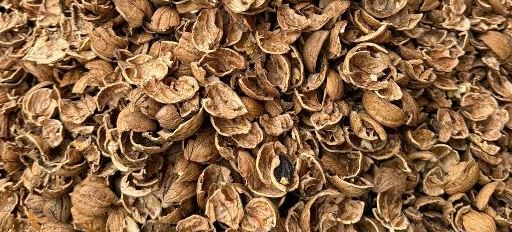
Almond, Pistachio and Walnut Shells: Strategic Energy Resource for the Spanish Circular Economy
Spain annually generates 250,000-300,000 tons of nut shells from the processing industry, a by-product with extraordinary energy potential and multiple applications that is evolving from a problematic waste to strategic biomass. As the second European almond producer and emerging leader in pistachio, the country has a constant flow of this underutilized resource that can generate significant economic value in bioenergy, activated carbon production, and biomaterials. The Spanish nut sector contributes more than 650,000 hectares of cultivation and its commitment to the circular economy is transforming shells into a strategic asset for processors, biomass producers, and valorization companies.
The Spanish nut industry produced 373,558 tons of almonds in shell in the 2024/2025 campaign, consolidating its position as the world's second-largest producer after the United States. The pistachio sector experienced spectacular growth in the last decade, exceeding 3,000% in cultivated area, with production between 7,500-10,000 tons. Spanish walnut maintains stable production of 17,000-21,000 tons annually. These figures generate a considerable volume of shells that, with yields of 65-70% for almond, 40-50% for pistachio, and 45-55% for walnut, represent an abundant and available raw material for multiple valorization processes.
Production and Economic Relevance of Shells in Spain and Europe
Almond Sector
The Spanish nut industry produced 373,558 tons of almonds in shell in the 2024/2025 campaign, consolidating its position as the world's second-largest producer after the United States. This activity generated approximately 240,000-270,000 tons of shell annually, applying the technical conversion ratio: almond presents a kernel-shell yield of 30-35%, which means that the remaining 65-70% corresponds to shell. Large industrial processors concentrate most of this production, with shelling plants distributed mainly in Andalusia, Castilla-La Mancha, Aragon, and Catalonia.
Spain cultivated 685,000 hectares of almond trees in 2024, with 85% of the total nut surface area. The sector generated more than 15,000 direct jobs in processing and commercialization, with a positive trade balance of 188 million euros in the 2023/2024 campaign. Spanish almond reaches 23% market share in the European market, positioning itself as a quality reference after the American one.
At the European level, the EU produced approximately 400,000 tons of almonds in 2023, generating more than 260,000 tons of shell annually. Spain concentrates 93% of EU production, followed by Italy and Portugal. This scale has fostered a growing vegetable biomass market valued at millions of euros annually with upward projection.
Pistachio Sector
The Spanish pistachio industry experienced spectacular growth in the last decade, exceeding 3,000% in cultivated area. Spain produced between 7,500-10,000 tons of pistachios in shell in the 2024/2025 campaign according to sector estimates, although official figures show discrepancies. This activity generated approximately 3,000-4,000 tons of shell annually, considering that pistachio presents a kernel-shell yield of 50-60% (i.e., 40-50% shell).
The cultivated area reached 85,800 hectares in 2024, with 75% concentrated in Castilla-La Mancha. The sector has explosive growth potential: 63% of plantations are not yet in production, which projects multiplying shell generation in 3-5 years. Castilla-La Mancha produced more than 5,600 tons in its best campaign, representing 75% of the national total.
At the European level, the EU produced approximately 35,000 tons of pistachio in 2023, with Spain being the main EU producer along with Greece and Italy. Global availability reached 1.39 million tons in 2024/2025, led by the United States (43%), Turkey (33%), and Iran (17%). Spain represents barely 1% of world production, but with prospects of reaching 10-15% of European supply by 2028-2029.
Walnut Sector
The Spanish walnut industry maintains stable production but with growth potential. Spain produced approximately 17,000-21,000 tons of walnuts in shell in the 2022/2023 campaign according to various sources. This activity generated approximately 9,000-12,000 tons of shell annually, applying the conversion ratio: walnut presents a kernel-shell yield of 45-55%, which means that 45-55% corresponds to shell.
The cultivated area covered 15,386 hectares in 2024, distributed between rainfed (7,358 ha) and irrigated (8,029 ha). The main producing regions are Castilla-La Mancha (4,010 ha), Catalonia (2,010 ha), Extremadura (1,851 ha), and Andalusia (1,532 ha). In the last decade, walnut orchards have increased by 50%, with particularly significant cases such as Castilla-La Mancha doubling its area, or Extremadura multiplying it by more than six.
Spain imports approximately 29,000 tons of walnut annually, mainly from the United States (main supplier) and Chile, to cover domestic consumption demand of 15,000 tons. The sector generates an economic value exceeding 50 million euros, with an average price of 2.5 euros per kilo of walnut kernel.
Technical Composition and Energy Characteristics of Shells
Almond Shell
Almond shell presents exceptional properties as biofuel that justify its energy use on an industrial and domestic scale. Its hardness and lignified composition give it a higher calorific value than many plant biomasses.
The main energy characteristics include a lower calorific value (LCV) of 3,940-4,420 kcal/kg (16.5-18.5 kJ/g), higher calorific value (HCV) of 4,420-4,750 kcal/kg, moisture content of 10-15% in dry commercial product, ash content of 1.0-1.5%, bulk density of 300-450 kg/m³, nitrogen content of 0.4%, sulfur content of 0.01%, chlorine content of 0.01%, and ash fusibility above 1,300°C.
The lignocellulosic composition comprises cellulose (25-30%), hemicellulose (25-30%), lignin (30-40%), and extractives (5-10%). Almond shell is commercially presented in three formats: whole (as it comes from shelling, for large industrial boilers), crushed 2-6 mm (for domestic boilers and small businesses), and powder (for specific industrial applications). Mechanical durability exceeds 98%, which minimizes fines generation during handling and transport.
Comparative advantages over other biofuels include calorific value comparable to wood pellets (4,180 kcal/kg), low ash content (1.1% vs 0.7-3% of pellets), absence of sulfur and nitrogen compounds, greater compositional homogeneity that reduces the need for boiler regulation, and product free of chemical additives and 100% natural.
Pistachio Shell
Pistachio shell presents energy characteristics similar to almond but with some particularities derived from its lighter structure and lower density. The estimated energy characteristics include a lower calorific value (LCV) of 3,800-4,200 kcal/kg, moisture content of 8-12% in dry processed product, ash content of 1.5-2.5%, and bulk density of 250-350 kg/m³.
The estimated lignocellulosic composition comprises cellulose (20-25%), hemicellulose (25-30%), lignin (25-35%), and extractives (10-15%). Pistachio shell, due to its lower density, requires greater storage volume per energy unit, but maintains excellent combustion properties. Its slightly higher ash content is compensated by clean combustion and absence of atmospheric pollutants.
Walnut Shell
Walnut shell presents an exceptional calorific value among agricultural biomasses, sometimes exceeding other shells due to its higher lignin and residual oil content. The estimated energy characteristics include a lower calorific value (LCV) of 4,200-4,600 kcal/kg, moisture content of 10-14% in processed dry product, ash content of 1.0-2.0%, and bulk density of 300-400 kg/m³.
The estimated lignocellulosic composition comprises cellulose (25-30%), hemicellulose (20-25%), lignin (35-45%), and extractives (5-10%). Walnut shell stands out for its high lignin content, which gives it higher calorific value and greater mechanical resistance. Its combustion generates high-quality ash with potential agricultural use as mineral amendment.
Current Prices of Shells in the Spanish and European Market
Almond Shell Market
The price of almond shell in Spain presents a consolidated market structure with multiple marketing channels. Prices vary significantly according to format, volume, and transport distance.
Prices by format (2024-2025) are: whole shell in bulk for full truck (more than 20 tons) between 60-80 €/ton, whole shell in big-bag (1,000 kg) between 70-90 €/ton, crushed shell 2-6 mm in bulk between 80-110 €/ton, and crushed shell in 15-30 kg bags between 110-150 €/ton (equivalent to 0.15-0.20 €/kg).
Price-determining factors include location and distance (transport adds 15-25 €/ton for every 50-80 km), negotiated volume (significant discounts on purchases exceeding 100 tons annually), presentation format (crushing adds 15-25 €/ton for processing cost), seasonality (slightly higher prices in winter due to greater heating demand), and quality and moisture (product with moisture below 12% achieves premium of 10-15 €/ton).
The Spanish almond shell market is estimated at 180,000-220,000 tons marketed annually, with an approximate value of 15-18 million euros. Approximately 70% is destined for direct energy use (industrial and domestic boilers), 20% for non-energy industrial uses (animal bedding, abrasives, excipients), and 10% for export.
Comparison with alternative fuels shows that ENplus A1 pellets cost 250-320 €/ton (100-150% more expensive), olive stone between 55-75 €/ton (similar or lower price), and forest chips between 60-90 €/ton (similar price). The quality-price ratio positions almond shell as one of the most competitive biomasses in the Spanish market, especially in producing areas of the southeastern peninsula where transport is minimal.
Pistachio Shell Market
The pistachio shell market is in the consolidation phase, with the processing industry still developing efficient commercial channels. Volumes are significantly lower than almond, which generates greater price variability. Estimated prices (2024-2025) include shell in bulk for full truck between 70-100 €/ton, shell in big-bag between 90-120 €/ton, and limited availability in crushed format.
The Spanish pistachio shell market is estimated at 2,500-3,500 tons marketed annually, with an approximate value of 200,000-350,000 euros. Most is currently destined for energy use in the processing plants themselves or is distributed locally in Castilla-La Mancha. The development of this market experiences exponential growth parallel to plantation maturation.
Walnut Shell Market
The walnut shell market presents less commercial development due to smaller productive scale and greater geographical dispersion of processing plants. Estimated prices (2024-2025) include shell in bulk for batches exceeding 10 tons between 60-90 €/ton, with very limited availability, mainly for self-consumption in processors.
The Spanish walnut shell market is estimated at 7,000-9,000 tons generated annually, with barely 30-40% externally marketed (2,000-3,500 tons). The rest is destined for energy self-consumption in the processing facilities themselves or is eliminated as waste. Development potential is significant as national production increases.
Market Trends 2023-2025
The nut shell market experiences a moderate upward trend since 2023, driven by three main factors: the European energy crisis (high prices of natural gas and fossil fuels increased demand for alternative biomasses in 2022-2023), crop expansion (increased nut surface area, especially pistachio, increases shell supply), and decarbonization policies (incentives for renewable energies and circular economy favor valorization of agricultural waste).
Almond shell prices have grown 18-25% in the 2022-2024 period, rising from 50-65 €/ton to 60-80 €/ton for bulk product. Stabilization is expected in 2025-2026 as the market absorbs the increased supply from new plantations.
Applications of Shells and Their Economic Valuation
Bioenergy and Combustion
Bioenergy represents 75-80% of current valorization of nut shells in Spain (190,000-230,000 tons annually). Shells are used in three main segments.
Industrial boilers (50-60% of total) are led by nut processing industries in energy self-consumption. Shelling plants with capacity exceeding 5,000 tons annually of almonds in shell have installed multi-fuel biomass boilers of 200-1,000 kW that consume all generated shell (6,500-19,500 tons annually). Heat produced covers almond drying (main consumption, 60-70% thermal demand), warehouse climate control (15-20%), and domestic hot water (5-10%). Investment payback period (boiler + silo + feeding systems) of 180,000-450,000 € is 3-5 years due to savings in fossil fuels. Additionally, they eliminate shell management cost as waste (15-25 €/ton in case of non-valorization).
Domestic boilers and small businesses (20-30% of total) experience sustained growth since 2015. Multi-fuel boilers of 15-50 kW for single-family homes, small rural hotels, and community buildings use crushed shell 2-6 mm as direct pellet substitute. A 200 m² house in cold zone consumes 4-6 tons annually, with cost of 400-750 €/year, representing 35-50% savings versus wood pellets. Use of crushed shell involves no extra work versus pellets, being used in the same boilers and stoves with minimal configuration adjustments.
Export and European industrial use (10-15% of total) includes Spain annually exporting 15,000-25,000 tons of almond shell, mainly to France, Italy, and Germany, where it is valued for its quality and homogeneity. Export price reaches 90-130 €/ton FOB Spanish port, with quality premium for product with less than 12% moisture and less than 1.2% ash.
Activated Carbons and Adsorption
Nut shells emerge as exceptional raw material for production of high-quality activated carbons, with adsorption properties comparable or superior to fossil-origin carbons. This application multiplies economic value by 20-50 compared to energy use.
The production process by physical activation (pyrolysis at 400-600°C followed by gasification with steam or CO₂ at 800-1,000°C) or chemical activation (impregnation with H₃PO₄, KOH or ZnCl₂ followed by pyrolysis at 400-700°C) obtains conversion yields between 25-40% by weight, obtaining carbons with BET specific surface area of 800-1,500 m²/g.
Industrial applications include water treatment (removal of organic contaminants, heavy metals, and emerging microcontaminants), gas purification (capture of CO₂, NOₓ, SOₓ, and volatile organic compounds), food industry (oil decolorization, juice clarification, wine purification), pharmacy and cosmetics (excipients, face masks, toothpastes), and catalysis (support for metal catalysts).
Market price of activated carbon from nut shells reaches 1,500-3,500 €/ton according to purity and specifications, with premium segments (pharmaceutical use) exceeding 5,000 €/ton. European projects such as CHEERS (Horizon Europe 2022-2026) develop scalable industrial processes aiming to reduce production costs by 30-40%.
Construction Materials and Insulation
Crushed nut shells are incorporated as lightweight filler in sustainable construction materials, taking advantage of their low density and insulating properties. Lightweight concrete through partial substitution (10-20% by volume) of conventional aggregates produces concrete with reduced density (1,400-1,700 kg/m³ vs 2,400 kg/m³ conventional) and better thermal properties, with thermal conductivity reduced by 25-35%.
Insulating panels made with mixtures of crushed shells with natural binders (starch, proteins, plant resins) produce panels with thermal conductivity of 0.060-0.080 W/m·K, comparable to mineral wool (0.035-0.045 W/m·K) but with lower carbon footprint. Resulting density of 200-350 kg/m³ facilitates handling and installation.
Animal Bedding and Agricultural Substrates
Use as animal bedding represents 15-20% of non-energy commercialization of shells (25,000-35,000 tons annually in Spain). Crushed almond shell 2-6 mm offers advantages versus wood shavings and straw: high moisture absorption capacity (250-300% by weight), low dust content versus sawdust, absence of tannins and resins that may cause irritation, greater durability before decomposition (4-6 weeks vs 2-3 for straw), and rapid composting after use (3-4 months).
It is mainly used in equines (horses, donkeys) and small ruminants (sheep, goats), with doses of 15-25 kg/m² and biweekly replacement. Sale price as bedding reaches 150-220 €/ton, higher than direct energy use.
Composting and Organic Amendments
Nut shells present excellent composting aptitude, with optimal C/N ratio (40-60:1) that facilitates aerobic decomposition without need for nitrogen amendments. Composting in turned piles reaches thermophilic temperatures (55-70°C) in 7-14 days, with complete cycle of 4-6 months. Final product presents pH 6.5-7.5, electrical conductivity below 3 dS/m, organic matter above 35%, and absence of phytotoxicity.
Agronomic applications include organic amendment for vegetable gardens and fruit trees (dose 3-5 kg/m²), mulch cover in citrus and fruit trees (dose 8-12 kg/m²), and degraded soil recovery (dose 10-20 tons/ha). Compost from nut shells is marketed in 20-50 liter bags for private gardening (5-8 €/bag) and in bulk for professional agriculture (40-70 €/ton).
Emerging Industrial Uses
Bioplastics and biopolymers through conversion of shells into polyhydroxyalkanoates (PHAs) via bacterial fermentation produce biodegradable bioplastics for food packaging, compostable bags, and agricultural films. Pilot facilities in Spain and Portugal process 200-400 kg/day of crushed shells with yields of 15-25% in PHAs. Sale price of PHAs (3,000-6,000 €/ton) justifies technological development.
Nanomaterials and nanocellulose through extraction of crystalline nanocellulose from shells produce cellulosic whiskers of 5-20 nm diameter with applications in polymer reinforcement, food coatings, cosmetics, and biomedicine. Market price of nanocellulose exceeds 10,000 €/kg in ultrapure grades.
Industrial abrasives use crushed almond and walnut shell with controlled granulometry (0.2-2 mm) as soft abrasive medium in cryogenic cleaning, delicate surface stripping, and finish polishing. Abrasives market consumes 3,000-5,000 tons annually in Spain, with sale price of 200-400 €/ton according to granulometry.
Logistics, Preservation, and Marketing Models
Economically Viable Distances and Transport
Transport cost constitutes the main limiting factor for marketing nut shells, given their relatively low energy density per transported volume. Logistics cost analysis shows that a full truck (24-26 tons) has a total cost of 1.2-1.5 €/km. For distances under 100 km, transport cost is 5-12 €/ton (8-15% of product price). For distances of 100-250 km, cost is 12-25 €/ton (20-35% of product price). For distances exceeding 300 km, cost exceeds 30 €/ton (more than 40% of product price).
Economic viability is optimized within a 150 km radius from processing plants for bioenergy market. For higher value-added applications (activated carbons, materials), transport is viable up to 400-600 km. Concentrated producing areas (southeastern peninsula for almond, Castilla-La Mancha for pistachio) minimize intra-sectoral distances.
Preservation and Storage Systems
Nut shells, due to their low moisture content (below 15%), present excellent stability during storage with basic care. Shelf life exceeds 12 months without significant deterioration, with storage in covered ventilated warehouse, protected from direct rain, maintaining moisture below 15% to prevent fungal development, at room temperature (does not require refrigeration), with handling losses below 3% by weight.
The main risk is absorption of ambient moisture in poorly ventilated warehouses, especially in coastal areas or rainy periods. Moisture above 18% can trigger development of filamentous fungi that degrade the material. Solution involves storage in warehouses with natural cross ventilation or use of exhaust fans in humid periods.
Marketing Models
The nut shell market in Spain operates through three main marketing models. Model 1: Direct processor-end user sale (35-45% of market) involves shelling plants selling directly to large industrial consumers, with typical price of 55-75 €/ton ex-works shelling plant and minimum volume of 20-30 ton batches (full truck).
Model 2: Specialized biomass distributors (40-50% of market) involves biomass distribution companies buying shell from processors, storing, crushing if necessary, and reselling to domestic consumers and small businesses. Typical price is 80-130 €/ton delivered to destination (includes transport up to 150 km), with distributor margin of 25-50 €/ton.
Model 3: Digital platforms and circular economy (5-10% of market, growing) involves online circular economy and industrial symbiosis platforms connecting supply and demand of industrial by-products, with typical fee of 3-8% commission on transaction, without physical possession of product.
Spanish and European Regulatory Framework Applicable
Classification as By-product vs Waste
Correct classification of nut shells determines legal obligations for management and commercialization. Spanish legal framework, harmonized with European regulations, establishes clear criteria for classification according to Law 7/2022, of April 8, on waste and contaminated soils for a circular economy (transposition of Directive 2008/98/EC).
Nut shells qualify as by-product when they simultaneously meet: certainty of subsequent use (consolidated market exists for energy or industrial use), direct use without additional transformation (can be used directly after mechanical separation from shelling), generation as integral part of productive process (result inevitably from nut processing), and compliance with legal requirements (comply with product regulations, human health and environmental protection).
Nut shells meeting these criteria are not waste and therefore do not require authorized waste manager or control and monitoring documents (DCS). They are freely marketed as product or raw material.
Specific Regulations for Energy Use
Regulations on biomass and solid biofuels include UNE-EN ISO 17225-1:2014 (Solid biofuels. Fuel specifications and classes. Part 1: General requirements), UNE-EN ISO 17225-6:2014 (Part 6: Non-woody pellets), and Royal Decree 1027/2007, of July 20 (Regulation of Thermal Installations in Buildings - RITE).
Shells destined for combustion must meet specifications for maximum moisture (15-20% according to application), maximum ash (3-5% according to quality class), minimum lower calorific value (14 MJ/kg or 3,340 kcal/kg), ash fusibility (above 1,100°C), and chlorine content (below 0.1%). Mandatory certification is not required for bulk nut shell, although many distributors voluntarily obtain adapted ENplus or DINplus certifications.
Incentives and Public Aid
Incentives for biomass investment include IDAE (Institute for Energy Diversification and Saving) with aid programs for thermal biomass installations in industrial, services, and residential sectors, Next Generation EU Funds with lines for circular economy projects and agricultural waste valorization, and Autonomous Communities with regional aid for biomass boiler investment. Typical subsidies cover 30-45% of eligible investment for industrial biomass boilers, up to 50-60% for SMEs and innovative projects.
Success Cases and Good Practices in Spain
Processing Companies with Energy Self-consumption
Several leading almond processing companies have implemented integral energy valorization systems, achieving thermal self-sufficiency and operational cost reductions exceeding 50%. Large shellers with processing capacity of 10,000-30,000 tons annually of almonds in shell have installed biomass boilers of 500-1,200 kW that consume all generated shell (6,500-19,500 tons annually). Investment payback period of 180,000-450,000 € is 3-5 years due to savings in fossil fuels.
Pistachio processing plants, technologically more recent, have incorporated energy valorization systems from design. Facilities inaugurated in 2019-2024 include multi-fuel boilers of 300-600 kW that use shell and process residues. Estimated energy savings exceed 25,000-60,000 €/year per plant, with avoided CO₂ emissions of 80-200 tons annually.
Specialized Biomass Distributors
Biomass distribution companies with more than 15-25 years of experience have consolidated profitable business models based on almond shell as flagship product. Family businesses transformed into sector references handle volumes of 3,000-10,000 tons annually of almond shell, with annual turnover of 250,000-900,000 € and gross margins of 20-30%. Customer loyalty exceeds 80% annually.
R&D&I Projects with Nut Shells
Spanish technology centers (AINIA, CIRCE, CIEMAT) lead European projects for conversion of shells into activated carbons for environmental applications. BioCarb-Med Project (2021-2025, H2020 funding) develops optimized activation processes with 35% reduction in energy consumption and 20% improvement in specific surface area versus conventional methods. Pilot plants of 100-300 kg/day in Valencia and Zaragoza have produced carbons with BET area exceeding 1,200 m²/g.
Spanish universities (University of Alicante, University of Granada, Polytechnic University of Valencia) investigate incorporation of shells in lightweight concrete and insulating panels. Prototypes have demonstrated thermal conductivity reduction of 30% and density reduction of 25% versus conventional concrete, maintaining mechanical strengths above 15 MPa.
Conclusions and Commercial Opportunities
Almond, pistachio, and walnut shells have evolved from problematic waste to strategic resource in the Spanish circular economy. With 250,000-300,000 tons annually generated in Spain, valued between 50-120 €/ton according to application and format, there is a consolidated market with growth potential in high value-added applications.
The current situation (2024-2025) shows that direct bioenergy represents 75-80% of volume (190,000-240,000 tons) with market value of 14-18 million euros, non-energy industrial uses represent 15-20% (38,000-60,000 tons) with value of 6-10 million euros, and elimination without valorization represents 5-10% (13,000-30,000 tons) with management cost of 0.2-0.5 million euros.
Potential for 2025-2030 projects that increased nut production, especially pistachio, will increase shell generation to 400,000-500,000 tons annually by 2030. Highest growth opportunities include activated carbons (value multiplier 20-50x) with target market of 5,000-10,000 tons of processed shell, export to European markets with increase to 40,000-60,000 tons by 2030, advanced bioplastics and materials with pilot projects that could consume 2,000-5,000 tons annually, and pelletizing and densification with production of 20,000-40,000 tons.
Recommendations for Nut Processors
Energy valorization strategy includes installation of biomass boilers exceeding 500 kW in plants with generation exceeding 5,000 tons/year of shells, with objective of 80-100% thermal self-sufficiency and payback period of 3-5 years. It is recommended to prioritize multi-fuel boilers that can alternate shell with other fuels, request public aid (30-50% subsidy), and implement silo systems that guarantee uniform annual supply.
Sales channel diversification includes long-term contracts (3-5 years) with large industrial consumers, alliances with biomass distributors, export exploration, participation in circular economy digital platforms, and voluntary quality certifications.
Recommendations for Investors and Valorization Companies
Specialized distribution opportunity requires initial investment of 500,000-850,000 € (storage warehouse, machinery, vehicle fleet), with expected ROI of 5-7 years and margins of 20-30%. Activated carbon opportunity requires investment of 2.5-4 million euros for pilot-industrial plant (1,000 tons/year carbon), with potential co-financing of 40-50%, expected IRR of 15-20%, and payback period of 7-10 years. Pelletizing opportunity requires investment of 400,000-700,000 € for pelletizing line (3,000-5,000 tons/year), with added value of 40-60 €/ton and expected ROI of 6-9 years.
Recommendations for Industrial and Domestic Consumers
For industries with high thermal demand, companies with thermal consumption exceeding 500 MWh/year should evaluate conversion to biomass, with bulk almond shell with energy cost of 12-18 €/MWh vs 60-90 €/MWh fossil fuels, potential annual savings of 25,000-45,000 € in 500 kW installation, boiler investment amortization of 3-5 years, and environmental benefit of 80-200 tons CO₂/year reduction.
For domestic users and small businesses, single-family homes and small hotels in nut areas with heating demand exceeding 4,000 kWh/year can achieve crushed shell with heating cost of 300-600 €/year vs 600-1,200 € with wood pellets, annual savings of 35-50% versus pellets and 60-75% versus diesel, guaranteed local availability, and direct use in pellet boilers and stoves with minimal adjustments.
Sustainable Development Framework
Utilization of nut shells aligns with multiple Sustainable Development Goals (SDGs): SDG 7 (Affordable and clean energy through accessible renewable bioenergy), SDG 9 (Industry, innovation and infrastructure through sustainable value chains), SDG 12 (Responsible production and consumption through circular economy and zero waste), SDG 13 (Climate action through greenhouse gas emission reduction), and SDG 15 (Life on land through sustainable agriculture and soil conservation).
The Spanish nut sector has demonstrated innovation capacity and commitment to sustainability. Integral valorization of shells represents an economic, environmental, and social opportunity that strengthens sector competitiveness and contributes to national energy transition. The facilitating regulatory framework, available technology, and consolidated markets make complete transformation of shells into strategic asset of Spanish bioeconomy viable in the 2025-2030 horizon.
Specialized platforms in agricultural by-product commercialization, such as Biomket, facilitate this efficient connection between generators and buyers, optimizing logistics and maximizing utilization of this valuable resource within the framework of the Spanish circular economy.

Biomket is a global marketplace that connects value chain actors to valorize organic waste and by-products through a circular economy model.